
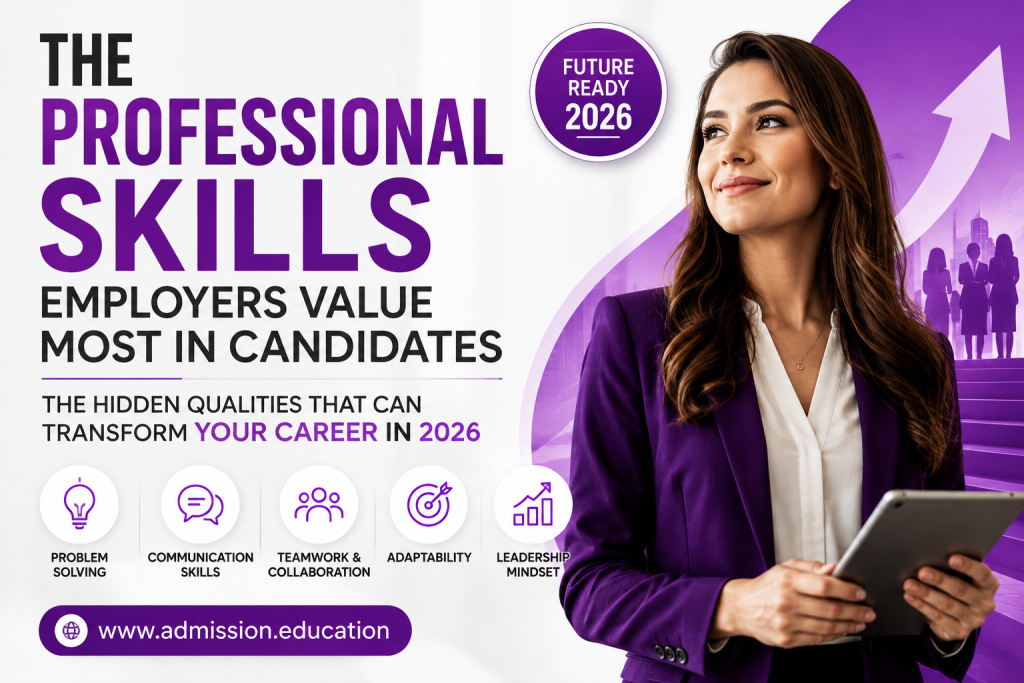
The job market is changing faster than ever before. Degrees, certificates, and technical knowledge still matter, but employers today are searching for something deeper. They are looking for candidates who can think critically, communicate effectively, adapt quickly, solve real problems, and bring meaningful value to an organization.
Many candidates focus only on what they know, but successful professionals understand that career growth depends heavily on how they apply their knowledge. Two people may have the same qualification, but the one who can collaborate, innovate, manage challenges, and influence positive outcomes will always stand ahead.
In a competitive world where companies receive hundreds of applications for a single position, professional skills have become the deciding factor. Employers are no longer only hiring employees; they are investing in people who can contribute, grow, and help organizations move forward.
The question every candidate should ask is not only, “What qualifications do I have?” but also, “What value do I bring that others cannot?”
Communication Skills: The Skill That Opens Almost Every Career Door
Strong communication remains one of the most valuable skills employers seek across every industry. Whether you are applying for a leadership role, customer service position, technology job, healthcare opportunity, or business role, your ability to express ideas clearly can define your success.
Great professionals know how to listen, understand different perspectives, explain complex information simply, and build trust with colleagues and customers.
Employers value candidates who can communicate with confidence because strong communication improves teamwork, reduces misunderstandings, and creates better business outcomes.
A person who can present ideas effectively is often seen as someone who can influence decisions and represent the company professionally.
Adaptability: The Ability to Grow When Everything Changes
The future belongs to professionals who can adapt.
Technology, workplace expectations, and business strategies are evolving continuously. Employers need people who are comfortable learning new tools, accepting challenges, and adjusting to changing environments.
Candidates who demonstrate flexibility show that they are prepared for uncertainty. They do not see change as a threat; they see it as an opportunity to improve.
Adaptability proves that you are not only prepared for today’s role but also capable of growing with the organization tomorrow.
Problem-Solving Skills: Employers Want People Who Find Solutions
Companies do not hire people only to complete tasks. They hire people who can identify problems and create solutions.
Strong problem-solving skills demonstrate creativity, logical thinking, and decision-making ability. Employers appreciate candidates who can analyze situations, evaluate options, and take responsible action.
A candidate who brings solutions instead of complaints becomes a valuable asset to any organization.
The ability to think independently and overcome obstacles is one of the strongest indicators of professional maturity.
Emotional Intelligence: The Skill Behind Successful Professionals
Technical skills may help you get an opportunity, but emotional intelligence often determines how far you can go.
Emotional intelligence means understanding your emotions, managing pressure, showing empathy, and building positive relationships with others.
Workplaces are built around people. Professionals who can handle disagreements respectfully, support team members, and maintain professionalism during difficult situations create stronger working environments.
Employers increasingly recognize that emotional intelligence improves leadership, teamwork, customer relationships, and workplace culture.
Leadership Skills: You Do Not Need a Title to Lead
Many people believe leadership begins after receiving a managerial position. In reality, leadership starts with responsibility, initiative, and the ability to inspire others.
Employers value candidates who take ownership, make thoughtful decisions, support their teams, and look for ways to improve processes.
A future leader is someone who does not wait for instructions for everything. They identify opportunities, take action, and create positive results.
Leadership skills show employers that a candidate has the potential to grow beyond their current position.
Digital Skills: The New Language of the Modern Workplace
Almost every industry has been influenced by digital transformation. From marketing and finance to healthcare and education, digital skills have become essential.
Employers value candidates who understand technology, can use digital tools effectively, and are willing to continuously upgrade their knowledge.
You do not need to become an expert in every technology, but having digital confidence gives you a significant advantage.
Professionals who combine industry knowledge with digital awareness are better prepared for future opportunities.
Teamwork and Collaboration: Success Is Rarely Achieved Alone
Modern workplaces depend on collaboration. Employers want individuals who can work effectively with different personalities, backgrounds, and departments.
Being a strong team player means respecting ideas, sharing knowledge, supporting colleagues, and contributing toward common goals.
A talented individual can create results, but a talented team can create transformation.
Companies look for candidates who understand that professional success is not only about personal achievement but also about collective growth.
Time Management: The Skill That Separates Productive Professionals
In a world filled with distractions, professionals who can manage priorities effectively create a major advantage.
Employers value candidates who can organize tasks, meet deadlines, handle responsibilities, and focus on important goals.
Time management reflects discipline, reliability, and professionalism.
A person who respects time shows that they can be trusted with greater responsibilities.
Continuous Learning: The Mindset Employers Cannot Ignore
The most successful professionals understand that learning never stops.
Industries change, new technologies emerge, and new challenges appear. Candidates who continuously improve themselves demonstrate ambition and long-term thinking.
Employers are attracted to individuals who are curious, willing to learn, and committed to personal growth.
Your ability to learn may become more valuable than what you already know.
The Future Belongs to Candidates Who Build Real Value
The competition for career opportunities is stronger than ever. Having qualifications may help you enter the conversation, but professional skills determine whether you stand out.
The best candidates are not only knowledgeable; they are adaptable, responsible, creative, emotionally intelligent, and prepared to contribute.
Employers are searching for professionals who can create impact, solve challenges, and grow alongside their organizations.
The future of work will not only belong to those with the highest qualifications. It will belong to those who combine knowledge with human skills and the ability to create meaningful results.
Start building these skills today because the candidate you become tomorrow depends on the professional you develop today.